[Home] [Bio] [Jelly Roll Blues] [Robert Johnson] [Dave Van Ronk] [Narcocorrido] [Dylan Goes Electric] [Beatles/Pop book] [The Dozens] [The Blues] [Josh White] [Hitchhiking] [Other writing] [Musical performance] [Joseph Spence]
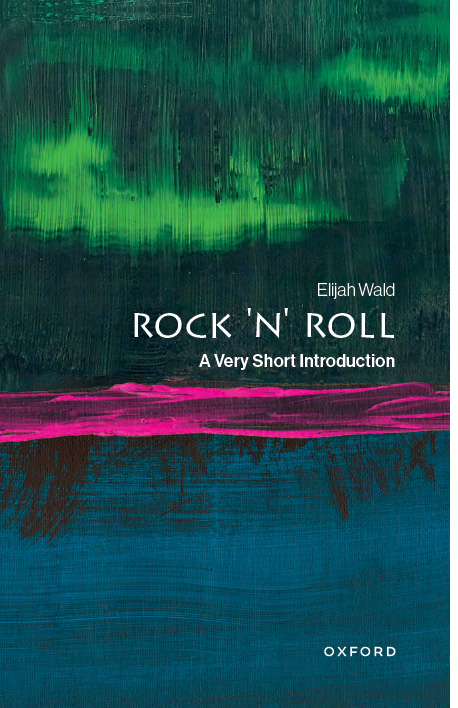 Rock 'n' Roll: A Very Short Introduction
Oxford University Press, 2026
Like the other books in Oxford's "Very Short Introduction" series, this volume is designed to provide a brief, thoughtful, provocative, and informed overview of its subject. It is a history of rock 'n' roll from the music's arrival in the early 1950s through the mid-1960s, looking at the major artists and styles and putting them in the context of the broader world that shaped the new styles and was shaped by them.
It is a musical story and also a story of changing times: of new technologies, new hopes, new fears; of racial prejudices and victories, the birth of a new youth culture, the rise of a new feminist consciousness and shifting gender roles; and of the thrill and power of Whop-bop-a-lu-mop, a-lop-bam-boom!
Available at all better bookstores and online. (If the latter, I recommend Bookshop.org, which supports independent stores).
1. What is Rock 'n' Roll?
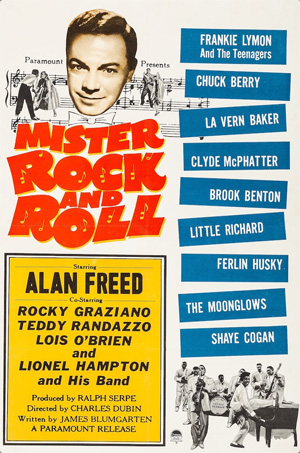 The simple history of rock 'n' roll begins with a Cleveland deejay named Alan Freed using that name for his radio show. The music he was playing was called rhythm and blues, a marketing term for records aimed at Black consumers, but he began drawing a huge audience of white teenagers who embraced his phrase for the music they loved, and other promoters jumped on it as a way of reaching that larger audience.
That's the simple story, but from the beginning the word was associated with more than the music. It had been used in songs reaching back to the 1920s as a fun euphemism for sex, and brought that sexiness along with it. It was the clarion call for a generation that was breaking lose from the constrictions of the war years and the stolidity of McCarthy Era America, the sound of teenagers with cars, transistor radios, television, movies, and dance parties -- and also the sound of danger, delinquency, and an unpredictable future.
2. Tangled Roots
Rock 'n' roll was insistently new, the sound of changing times and generations, but it drew on a wide range of earlier music. This chapter explores the sources of rock 'n' roll in blues and jazz, the Black styles that formed the core of rhythm and blues; in country music, the white southern style that nurtured a generation of rockabillies and brought guitars to the forefront; in Black gospel music, which shaped the vocal groups that established many of the first great rock 'n' roll hits and pioneered a fervent singing style that would break out with rock 'n' roll and evolve into soul; in Latin music, which provided a wide range of new rhythmic flavors; and in mainstream pop, which was often viewed as the opposite of rock 'n' roll, but constantly shaped and interacted with the new sounds and styles.
3. Changing Technologies, Changing Experiences
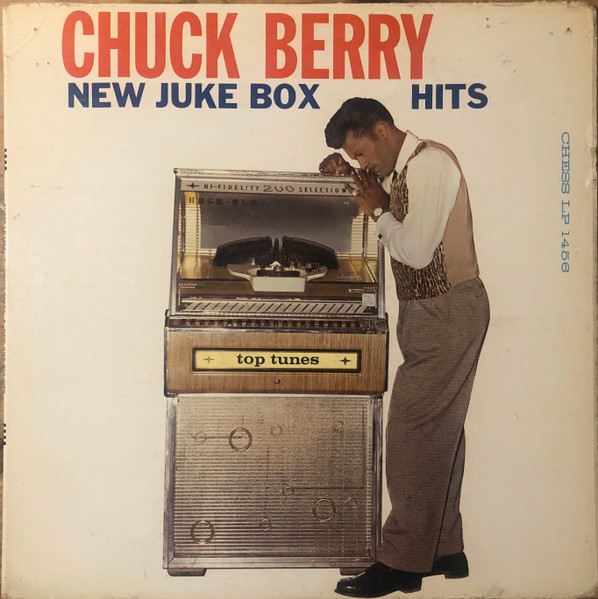 Rock 'n' roll was shaped as much by new technologies as by new tastes. In the past, phonograph records were heavy, breakable, and only played one song on each side. In the 1950s, vinyl 45s were cheap, light, and durable, making it easy for small companies all over the US to compete with the established major labels. Electric amplification made it easy for small combos to replace big bands, and for kids with guitars to fill halls of enthusiastic dancers. Television at first avoided rock 'n' roll, but by taking over the national airwaves it opened the way for local radio stations that targeted minorities and teenagers. Movies spread the music along with new dances, new clothing styles, and new attitudes, first around the United States and then around the world. Along with the specifics, there were the intangibles of an atomic age, the confusion and thrill of a moment when no one knew what might happen next.
4. Rhythm and Race
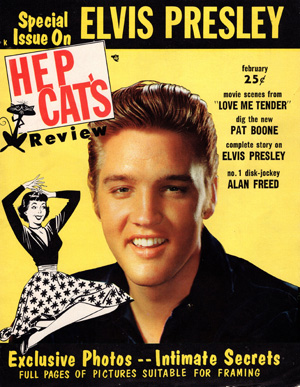 In the beginning, rock 'n' roll was just a new word for R&B, which meant it was Black music. The first rock 'n' roll stars were Black, and when white teens started listening and dancing to the music, that was part of its appeal. That was also what scared a lot of white parents and authority figures, and soon record companies were coming up with ways to make the music more palatable to a white mainstream, remaking Black hits with white singers who had clean-cut images and were safe for television. Black artists struggled to be heard on pop radio, and began breaking through -- and then Elvis Presley arrived and blew the market wide open. Some people saw him as too Black, a gateway drug to racial mixing; some saw him as a white interloper, cutting Black artists out of a world they had made. Record companies and movie producers saw him as a goldmine and promoted a wave of white "teen idols" to capitalize on his success. Rock 'n' roll tours and television shows mixed white and Black artists, and sometimes white and Black audiences -- and that story can look very different depending on who is telling it.
5. Gyrations and Gender
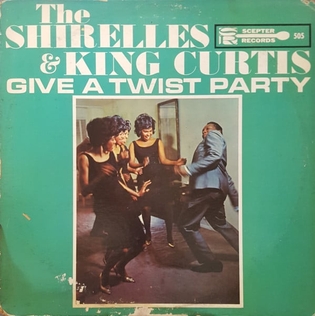 Most of the top rock 'n' roll stars were male, but everyone knew that most of the dancers, radio listeners, and record buyers were female. That was the logic behind the wave of post-Elvis teen idols: cute boys who could be fantasy boyfriends. That was also the logic that made a lot of white parents so worried: Alan Freed's televised Rock 'n' Roll Party was abruptly cancelled when the camera caught a Black singer dancing with a white fan. There were always some female singers -- and then, as the fifties turned into the sixties, they took over in a wave of "girl groups." At the same time, the twist was spawning a revolution in dance styles; first a revolution in how kids were moving, and then a social revolution as girls got out on the floor by themselves or with other girls. The new dance styles opened the way for new rhythms, from the Pentecostal polyrhythms of the Isley Brothers to the Afro-Caribbean rhythms of Mongo Santamaria, and James Brown's "Brand New Bag," blazing a trail to funk, disco, and hip-hop.
6. Around the World and Back Again
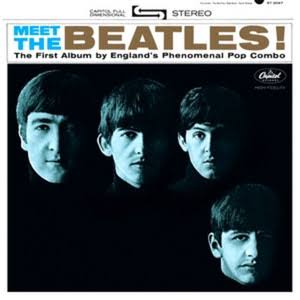 From its earliest years, rock 'n' roll was spreading around the world, following a trail blazed by jazz and swing, promoted by the power of the US record industry, and spread by Hollywood movies that made it the soundtrack of youthful rebellion from London to Berlin, Cairo, Sydney, Tokyo, Buenos Aires... Local bands copied US songs and styles, and came up with their own translations and variations. Local film industries produced their own teen idols and fashions. The United States continued to dominate the market...until, suddenly, to everyone's surprise, a group of witty young rockers with bizarre hairstyles and irresistably catchy songs flew across the Atlantic and led a British Invasion. Then came Dylan, and folk-rock, art-rock, prog-rock... it was a new era, and the end of this particular story.
(The back matter includes recommendations for further reading, a "top 20" selection of necessary songs, and an index, making a total of 126 pages--a "very short introduction" indeed, but hopefully a useful guide for newcomers with some provocative ideas and interesting tidbits for experienced fans, listeners, and scholars.)